.svg)
Your phone didn't charge last night. It's sitting at 20%. You dim the screen, close background apps, and start rationing every notification. The same emails and texts that wouldn't bother you at full battery suddenly feel like too much.
Now imagine a morning where you wake up at 100%. Same inbox. Same calendar. Completely different experience.
That gap between the two mornings has nothing to do with what's happening around you. It has everything to do with what's happening inside you. And the word for it is capacity. (This idea came up recently on The Mental Fitness Podcast, and it's worth sitting with.)
What Capacity Actually Means
Capacity isn't productivity. It's not grit, toughness, or the ability to push through pain. It's your internal bandwidth to stay regulated under pressure, absorb stress without spilling it onto the people around you, and recover when something knocks you sideways.
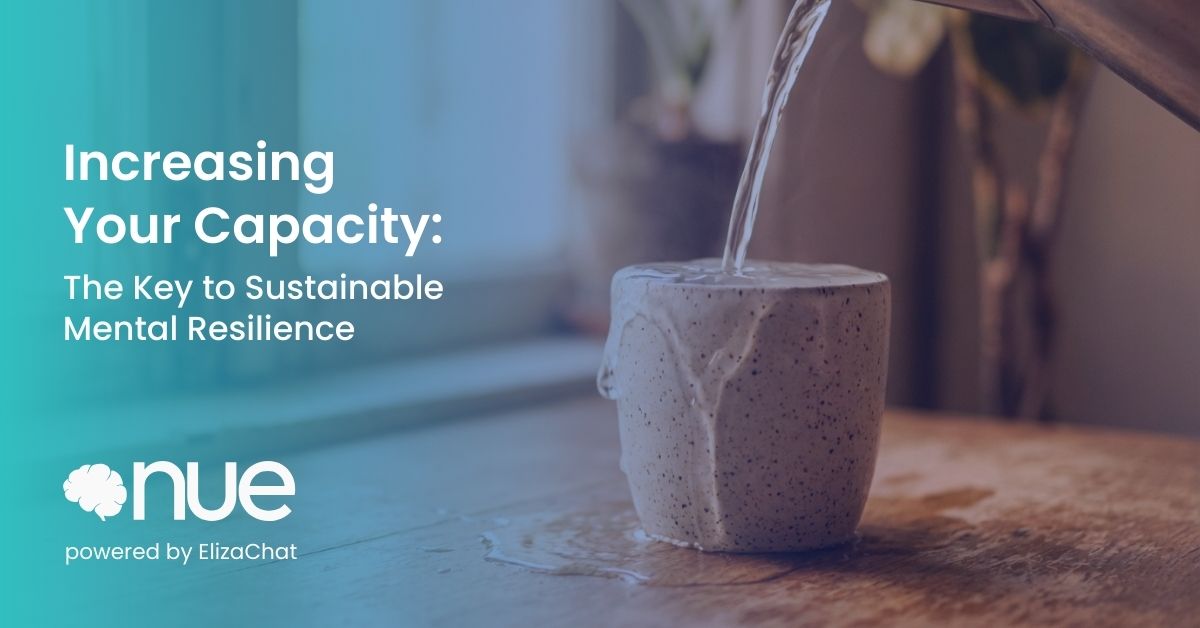
Think of a cup. A small cup overflows with one extra pour. A larger cup holds the same amount of water without a problem. The water didn't change. The container did.
Most people spend their energy trying to reduce water. They rearrange their schedules, cut commitments, and take vacations. And those things help in the moment. But if the container stays the same size, you're back to overflowing within 48 hours of returning to normal life.
The real question isn't "how do I remove stress?" It's "how do I hold more of it without breaking?"
The Signs Your Capacity Is Running Low
Capacity depletion doesn't start with a dramatic crash. It starts with small things you might not even notice.
You stare at an email you already know how to answer and just... don't respond. You snap at someone over something that normally wouldn't register. Simple tasks feel heavy. You procrastinate the important stuff and fill time with busywork instead.
Other signals: avoiding hard conversations (at work or at home), feeling perpetually behind even when your to-do list is reasonable, emotional numbness where you should feel something, or overreacting to minor friction.
Here's the thing about procrastination in particular. When your capacity is depleted, you don't stop working. You just stop doing the work that matters. You distract yourself with lower-stakes tasks because you don't have the energy for the ones that actually require focus. You know what you need to do. You look at it, and then you do something else. That's not laziness. That's a capacity signal.
Why Vacations Don't Fix It
Here's the part most people get wrong. A vacation restores you temporarily. You sleep in, disconnect, eat well, and move your body. You come back feeling recharged.
Then 48 hours into your first week back, you're already tight again. Already dreading Sunday night. Already conserving energy like that phone at 20%.
The vacation refilled the battery. But the battery is still the same size. And the load hasn't changed.
If you dread coming back from time off, that's information. It means your baseline capacity hasn't shifted. You recharged, but you didn't grow.
The Equation That Matters
There's a simple framework here.
When your load exceeds your capacity, stress spills over. You feel overwhelmed, reactive, on edge. When load equals capacity, you survive but feel tight. No room for the unexpected. One more thing could tip you over.
When capacity exceeds load, you feel stable. Creative. Resilient. You can absorb a surprise without falling apart.
The goal isn't zero load. That's not realistic in any chapter of life. The goal is surplus capacity.
And here's where it gets counterintuitive, especially for high performers: doing less can make you more productive. When you're constantly redlining, you need long recovery breaks. You burn hot and crash. But consistent effort with spare capacity is sustainable. You show up every day. You don't need a dramatic reset every few weeks.
There's an entire productivity culture built on the idea that spare capacity means you're not working hard enough. If your plate isn't overflowing, you should add more to it. But think about what happens on the other side of that. You push to 100% utilization, and the first unexpected thing that hits (a sick kid, a project that goes sideways, a bad night of sleep) sends you over the edge. You end up needing a week off to recover from what should have been a normal Tuesday. The math doesn't work. Running at 80% capacity consistently outperforms running at 110% with frequent crashes.
What Simone Biles and LeBron James Teach About Capacity
At the Tokyo Olympics, Simone Biles withdrew from most of her events. She was the best gymnast in the world. The expectation was another round of gold medals.
But during an early vault, she experienced what gymnasts call "the twisties," a mental block where you lose spatial awareness mid-air. The pressure of expectations, social media scrutiny, and the weight of performing at the highest level on the biggest stage had exceeded her capacity. Continuing wasn't just emotionally risky. It was physically dangerous.
She stepped back. And then she returned for the balance beam final and won bronze. Respecting her limits didn't end her competition. It saved it.
LeBron James offers a different angle on the same principle. He's the highest-scoring player in NBA history, not because he's the most explosive athlete, but because of how long he's sustained elite performance. He prioritizes rest, recovery, and sleep to a degree that draws criticism from fans who remember the "play through everything" era of the 90s.
The results speak for themselves. Fewer injuries, more seasons, more total output than almost anyone in the sport's history. Elite performance built on elite recovery.
Acute Capacity vs. Structural Capacity
Not all capacity building works the same way. There are two layers worth understanding.
Acute capacity is your short-term, day-to-day bandwidth. It fluctuates based on how you slept, whether you exercised, and if you had a meaningful conversation or took a real break. These things refill your battery. They matter. But they don't make the battery bigger.
Structural capacity is your baseline. It changes slowly, through sustained practice over weeks and months. Setting boundaries and maintaining them. Staying in uncomfortable conversations instead of avoiding them. Protecting your sleep is not just on weekends; it is a daily, non-negotiable. Strengthening relationships that ground you.
The difference matters. A weekend of catching up on sleep is acute. It recharges you. But if you burn it at both ends all week and then "catch up" on Saturday, you're not building anything. You're just running a longer recharge cycle. Committing to consistent sleep habits that you protect even when work gets busy is structural. That's what actually expands what you can handle over time.
Think of it as strength training rather than pain medication. The medication makes you feel better right now. The training makes you harder to hurt in the first place. Both play a role, but only one changes your baseline.
You know structural capacity is growing when the things that used to send you into a spiral only upset you briefly. When you recover faster. When it takes more to knock you off balance than it used to. The process is gradual enough that you might not notice it happening. But six months of consistent sleep, regular exercise, and maintained boundaries will change how you move through your days in ways that a two-week vacation never could.
A Quick Capacity Audit
Right now, rate your capacity from 1 to 10.
Then ask yourself four questions:
What's draining you? Not just the obvious stressors. What's quietly pulling energy in the background? Unresolved conversations, poor sleep habits, commitments you said yes to but resent?
What's restoring you? If you struggle to answer this one, that's worth paying attention to.
Where are you overextended? Where have your commitments outpaced your container?
What's one change that would increase your capacity? Not five changes. One. Better sleep. A conversation you've been avoiding. Thirty minutes of movement. One boundary you've been meaning to set.
The reason this exercise works is that most of us don't think about capacity until it's already gone. We wait until we're snapping at coworkers or dreading Monday at 4 pm on Saturday before we ask what went wrong. By then, we're in damage control, not growth mode. Doing this audit when you're at a 6 or 7 is more useful than waiting until you're at a 2.
Sometimes the answer is a big move, like Biles stepping back from the Olympic stage. More often, it's something small and repeatable that compounds over time.
The Real Point
You may not need a different life. Your circumstances might be perfectly normal. The load on your plate might be standard for someone in your position.
You might need a larger container.
Mental fitness isn't about eliminating hard things from your life. It's about becoming someone who can hold them without breaking. Capacity is how you get there. Not through one dramatic intervention, but through daily practice that quietly makes you stronger than you were last month.
Pick one thing. Commit to it. Watch what changes.